
How Record Companies Support Artist Development
by Camille Barbone
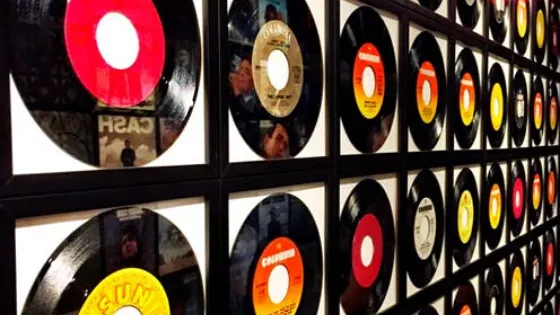
We have covered artist managers, record producers and music publishers as members of the artist’s development team. It is time to recognize the 800 lb. gorilla on the team, the record company. In the past, record companies were focused on developing successful recording artists and actually put their money where their mouth was by allocating a significant amount of money for that purpose. They had a highly specialized, even one-dimensional business model, that revolved around developing recording artists for the purpose of selling pre-recorded music. The label’s primary focus was sales fueled by radio airplay and live performance and tours.
Just a decade ago the label’s primary source of income was tangible, pre-recorded music. Most recently it was the compact disc sold in stores, online or via mail order and further back in time, the labels sold vinyl and cassette tapes through retailers. The labels were the sole source of the sale of pre-recorded music. The idea of digital or electronic music delivery, playlists and streaming was almost a si-fi notion, an idea, a mere twinkle in the eye of innovative techies. Record labels have a history of lagging behind technology and true to form, it took them a long time to believe in and ultimately embrace the Internet as a viable source of income. However, hey did catch on to iTunes quickly, but the “sale” component was still in play with music being downloaded on to iPods, cell phones and computers.
Today, it’s an entirely different ball game. Record companies have had to embrace the new concept of access to their music not ownership. The entire business model has changed with labels providing “content” in the form of music to sites that stream and compile playlists for people to access. Only the most dedicated audiophiles maintain a music collection these days. The popular way to enjoy pre-recorded music is to stream whatever you want to hear, whenever you want to hear it and wherever you are at that moment in time. In the new model, the labels provide their musical masters as content in return for advertising and subscription income from giant aggregate sites like Spotify. Further, they are offering 360 deals to most, if not all of their new artist signings.
Simply put a 360 deal entitles the label to income from music sales as well as a number of additional revenue streams that were originally earmarked solely for the Artist’s bank account. 360 income to labels can include merchandise, publishing, live performance, film, television, licensing, TV commercials, endorsements, sponsorships and anything else an artist can turn coin doing. The rationale of the 360 deal, from the record label’s point of view, is that an artist will receive more attention, be offered longer term contracts and receive much needed artist development expertise in return for a percentage of multiple income streams. The advent of this “multiple rights” deal was predicated on the record company’s belief that it had to compensate for the loss of tangible product sales and digital downloads and supplement their revenue from streaming.
What do Record Labels Do
The Internet has made many believe that artists no longer need record labels. Indeed, the Internet has provided a new avenue for music lovers and buyers. But you can only go so far as an independent artist, even if you are signed to one of the smaller indie labels. Just ask super-star lEd Sheeran who was killing it as an indie artist but realized that he needed a major label to unlock the doors to super-stardom and mass market appeal. Record labels do more than distribute music to retailers and aggregate sites. Well established and well-run record companies have specialized resources that are vital to the success of an artist. You really cannot become a super-star without a major label affiliation. Financial backing is probably at the top of the list of reasons why. Money paves the way to reaching more people, establishing a brand and systematically promoting music throughout the world. It is a record label advance that enables artists to live and work at their art and craft. Imagine walking into a bank and asking for a loan to sustain you while your music hits and you develop a substantial audience. They would laugh you right out the door, ask you how you will collateralize the loan and then after inquiring about your employment status, reject your application. Labels make those loans and help to keep artists afloat as they develop.
Marketing power is one of a label’s most important resources. They have the staffing and know-how to brand an artist. They can create, launch and manage multi-faceted campaigns that are costly and require precise timing and execution. Awareness is at the core of an artist’s success. Music lovers must be exposed to an artist and his or her music. The Internet alone will not do that for an artist. It is crowded and glutted with music, most of which sucks. Remember there is a “push” and “pull” aspect to marketing. A website, a Facebook page or Instagram account does not “pull” people in on its own. There needs to be something, a campaign, a promotional event that draws or “pushes” people towards an artist’s internet presence. Record labels push fans towards artists.
Well-established labels often have offices and staffing throughout the world. Each office is uniquely positioned to understand the proclivities of its respective territory. The staff establishes contacts and relationships with promoters, radio stations, businesses, performance venues, the press and the public. Record labels are formidable gatekeepers. They open doors to major films, television, commercials, licensing deals and strategic partnerships. They give you access to top booking agents and tours that are essential if you want to hundreds of thousands of people to see you perform. They assist in standardizing and distributing an artist’s merchandise and swag. They help an artist reach their tipping point at a faster pace and on a broader scale.
What to Look for in a Record Deal
Currently, 360 deals seem to be the only type of contract offered by major record labels and sizeable indies, but there are other alternatives. If you are not willing to bite the bullet, take a 360 deal and turn over a portion of every dollar you earn to your label, you can look to indie labels that offer a wide variety of hybrid deals that may be a better fit. It all depends on the type of music you are making and what you and your team think you need to be successful.
There are hybrid deals out there that mix and match a variety of services, royalty structures, and support for new signings. You can sign up for digital distribution only or contract with a company that is willing to help with promotion or publicity, distribution and royalty collection. You can join forces with companies that swap cold hard cash for the ownership of your masters leaving you on your own to develop your career in other areas such as publishing, live performance and media such as film, TV, commercials or licensing. This is not a bad situation as long as you have a strong artist development team behind you.
Small, independent labels are innovative and creative. Many offer fair and balanced deals that are meant to forge a solid and valuable partnership between artist and label. The Internet, digital music and streaming has made it possible for smaller labels to make a difference and provide artists with more ways to reach more music lovers. But these labels are not about fame, they are about success; that is providing an opportunity to develop a viable career for someone that wants to make a living in music and performance. The smaller labels are also the first place a major record label goes to poach artists that have been jump started and show promise.
Artist and label must be compatible. It’s like a marriage and the lines of communication must be open, easily accessed and well established. First and foremost, the label must understand you as an artist and your music as a viable product. They must recognize your selling points and work to bring them to the forefront. They must get behind you and support your quest for name recognition, airplay, sold out performances and cross over into other mediums.
Learn more about Camille Barbone’s coaching services
Explore Camille Barbone’s book ‘Secret Weapons’ for additional insights into the music industry